In this article, we explore 10 carefully chosen Islamic books available on MeccaBooks that serve as excellent resources for non-Muslims to learn about Islam. Whether you’re seeking an accessible introduction, a deeper understanding of Islamic theology, or perspectives on contemporary issues, these books cater to diverse interests and levels of knowledge.
From concise overviews like A Thinking Person’s Guide to Islam and Islam: A Very Short Introduction to detailed explorations of Islamic practices and law, these works offer reliable and enriching insights. They emphasize clarity, context, and authenticity, making them ideal companions for anyone curious about this rich faith tradition.
Let’s dive into the list and discover how these books can enhance understanding and bridge gaps of knowledge about Islam.
Note: This article includes affiliate links to MeccaBooks, a platform offering a wide selection of Islamic literature. By using these links to make a purchase, you’ll be supporting our efforts to curate helpful resources, at no extra cost to you.
Islamic Books Highly Suitable for Non-Muslims
Books that provide clear, accessible, and unbiased insights into Islam, ideal for readers without prior knowledge.
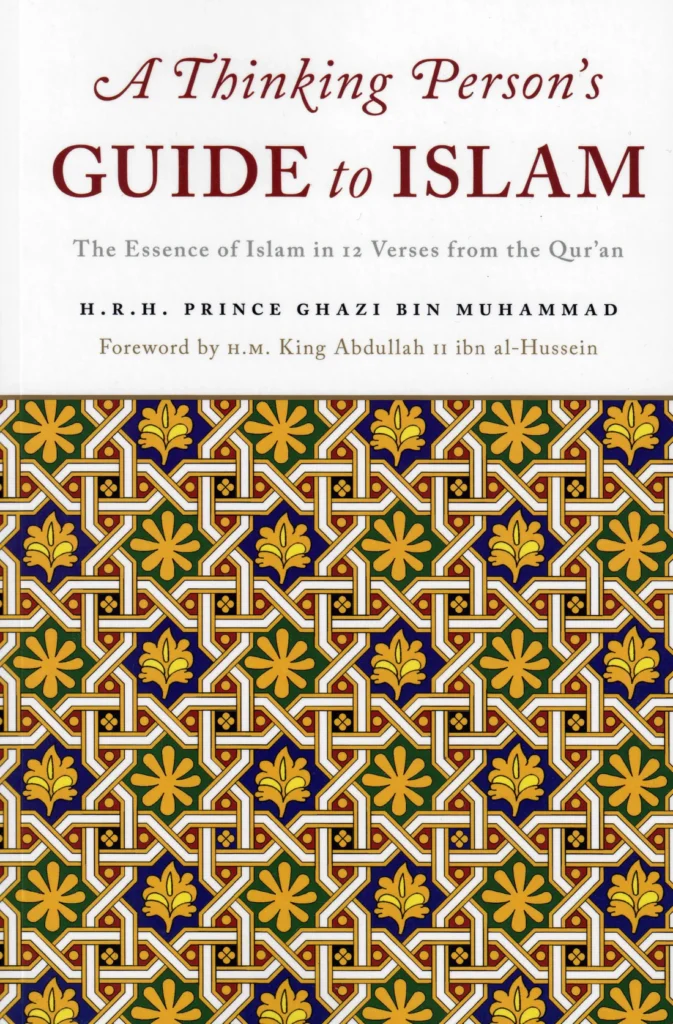
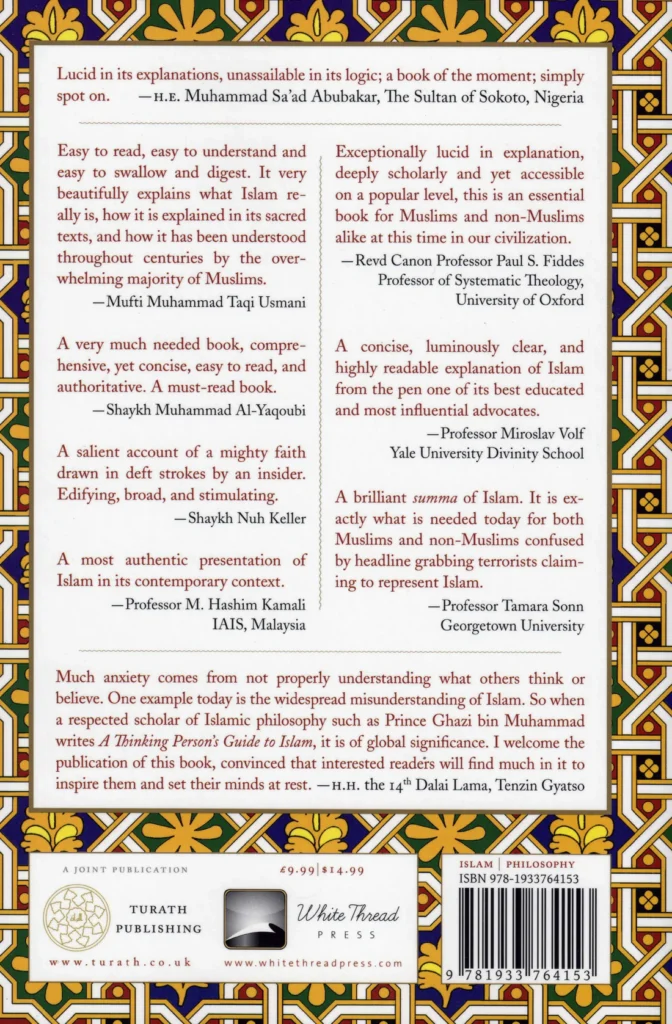
A Thinking Person’s Guide to Islam : The Essence of Islam in 12 Verses from the Qur’an By Prince Ghazi Bin Muhammad – WHITE THREAD PRESS
Description
The Essence of Islam in 12 Verses from the Qur’an by Prince Ghazi bin Muhammad is a powerful exploration of Islam, aimed at dispelling the widespread misunderstandings of the faith in the modern world. The book presents a clear and concise overview of Islam, focusing on twelve pivotal verses from the Qur’an to highlight the essence of the faith. This work provides an antidote to the distorted portrayals of Islam found in the media, particularly those associated with extremists who misrepresent the teachings of the religion. Prince Ghazi, a prominent scholar and member of the Jordanian royal family, presents Islam as it has always been understood by the vast majority of Muslims—peaceful, just, and rooted in deep spirituality.
In this timely book, the author reflects on the true meaning of Islam, exploring fundamental concepts such as the nature of God, the role of prophets, the teachings of the Qur’an, and the core beliefs and practices that define a Muslim’s life. Through his insightful and scholarly approach, the book provides a balanced and nuanced account of the faith, while confronting modern misconceptions directly.
The book is not only a scholarly endeavor but a call for thoughtful reflection. It is ideal for non-Muslims seeking a deeper understanding of Islam’s core tenets and for those looking to clear up misconceptions about the faith in light of the challenges faced by Muslim communities today.
About the Author
Prince Ghazi bin Muhammad, a highly educated and respected scholar, holds multiple degrees from prestigious institutions such as Princeton University, Cambridge University, and Al-Azhar University. As an advisor to King Abdullah II of Jordan, he is deeply involved in interfaith dialogue and religious scholarship. His works, including Love in the Holy Qur’an, have earned international recognition. Prince Ghazi’s writings aim to bridge cultural and religious divides and offer insight into the spiritual and philosophical teachings of Islam.
This book is an essential read for those looking for a balanced and authentic account of Islam, making it an excellent choice for non-Muslims interested in learning about the true message of the faith.
Analysis of A Thinking Person’s Guide to Islam: The Essence of Islam in 12 Verses from the Qur’an
The book *A Thinking Person’s Guide to Islam: The Essence of Islam in 12 Verses from the Qur’an* by Prince Ghazi Bin Muhammad appears to be an excellent option for a non-Muslim to learn about Islam. Here’s an analysis of the book description:
Strengths for Non-Muslims:
1. Clarity on Misconceptions:
– The book explicitly aims to address misconceptions caused by extremist distortions. This is a common concern among non-Muslims trying to understand the essence of Islam, making it highly relevant.
2. Focus on Core Teachings:
– By highlighting “12 verses from the Qur’an,” the book provides a focused and accessible way for readers to engage with the core principles of Islam. This simplicity makes it less overwhelming for someone new to Islamic studies.
3. Balanced Perspective:
– It positions itself as an authentic representation of Islam, countering distorted versions. This balanced approach is crucial for helping non-Muslims differentiate between the religion’s teachings and its misapplications.
4. Author’s Credibility:
– Prince Ghazi Bin Muhammad is a renowned Islamic scholar and intellectual, lending credibility to the book’s content. His scholarly background suggests that the book is both well-researched and authentic.
5. Engaging Context:
– The framing of Islam in the context of global conflicts and misunderstandings makes it relatable and compelling for contemporary readers, especially those with limited knowledge of the faith.
Potential Limitations:
1. Academic Tone:
– Depending on how the content is written, the book might lean towards an intellectual or academic audience. If the language is too formal or scholarly, it may not resonate as easily with casual readers.
2. Lack of Practical Guidance:
– While the description highlights the essence of Islam, it doesn’t specify whether the book addresses practical aspects of Muslim life or spirituality, which some readers might seek.
Why It’s a Good Choice:
– The book is an excellent introduction to Islam for non-Muslims because it addresses common misconceptions and provides a direct understanding of Islam through selected Qur’anic verses. It is likely concise, focused, and written by a reputable scholar, making it both accessible and authoritative.
Recommendation:
If the language is approachable, this book is a strong candidate for non-Muslims interested in understanding the true essence of Islam. It complements other introductory books by focusing specifically on Qur’anic teachings while addressing contemporary issues.
Islam: A Very Short Introduction By Malise Ruthven – OXFORD UNIVERSITY PRESS
Description
Islam: A Very Short Introduction by Malise Ruthven, part of the acclaimed Very Short Introductions series from Oxford University Press, provides a concise yet comprehensive exploration of Islam. Written by an internationally respected scholar, this book offers a balanced view of the religion’s history, principles, and contemporary challenges. It’s ideal for readers looking to grasp the complexities of Islam and its impact on global events.
Key Features:
- Clear Explanations: The book demystifies Islamic beliefs and practices, such as the significance of the Qur’an, the central role of Shari’a (Islamic law), and the differences among Sunni, Shi’ite, and Wahhabi traditions.
- Timely Analysis: Ruthven examines contemporary topics like the concept of jihad, women’s roles in Islamic societies, and Islam’s adaptation to the modern world.
- Global Perspective: A new chapter on “Globalized Islam” discusses economic globalization, Islam’s relationship with democracy, and its perception in the West.
- Historical and Modern Context: From the emergence of al-Qaeda to the Arab Spring, the book highlights key developments shaping Islam’s global presence.
- Accessible and Scholarly: With updated references and further reading suggestions, it bridges the gap between academic study and popular understanding.
Ruthven’s nuanced approach addresses misconceptions and sheds light on Islam’s diversity and cultural significance. With 200 pages of well-structured insights, this book is a valuable resource for anyone seeking to better understand one of the world’s most influential religions.
About the Author
Malise Ruthven is an esteemed writer and expert on Islamic and Middle Eastern studies. His works are known for their clarity and depth, making complex topics accessible to a broad audience.
This 2013 edition is especially relevant for readers interested in the evolving dynamics of Islam in the 21st century, offering a solid foundation for further exploration of the faith.
Analysis of Islam: A Very Short Introduction
Malise Ruthven’s *Islam: A Very Short Introduction* provides a concise yet comprehensive overview of Islam, targeting general readers who may not be familiar with the religion’s tenets, history, or global significance. The description suggests that this book is a good starting point for non-Muslims interested in learning about Islam, but with some caveats.
Strengths as a Resource for Non-Muslims:
1. Accessible Format:
– As part of the *Very Short Introductions* series, the book is designed to be brief and straightforward, making it ideal for readers seeking a quick yet informative introduction.
2. Authoritative Perspective:
– Malise Ruthven is a well-regarded scholar of Islam, lending credibility to the text. His insights are likely to be balanced and based on rigorous research.
3. Comprehensive Coverage:
– The book addresses foundational topics like the divisions within Islam (Sunnis, Shi’ites, Wahhabis) and the importance of Shari’ah (Islamic law), providing essential context for understanding the religion’s internal diversity.
4. Focus on Contemporary Issues:
– By discussing topics such as globalized Islam, the role of women, and perceptions of Islam in the West, the book bridges traditional Islamic teachings with modern societal challenges and controversies. This contemporary relevance makes it particularly useful for non-Muslims trying to reconcile the religion with current global events.
5. Balanced View on Misconceptions:
– The book explicitly challenges stereotypes by juxtaposing Islam’s peaceful teachings with media portrayals of violence, fostering a more nuanced understanding.
6. Additional Learning Tools:
– With updated references and a “Further Reading” section, readers can explore topics in more depth if they choose.
Potential Challenges for Non-Muslims:
1. Focus on Critical Analysis:
– The book’s engagement with controversial topics, such as jihad, women’s roles, and democracy, may focus more on critique and interpretation rather than serving as a devotional or purely educational introduction. Some readers might find this approach overly analytical or detached from the spiritual essence of Islam.
2. Complex Topics in a Short Space:
– The format limits the depth of discussion. Topics like the divisions within Islam or globalized Islam may be oversimplified or presented too briefly for readers seeking more substantial explanations.
3. Western Lens:
– Ruthven writes from a Western academic perspective, which could influence how Islamic beliefs and practices are framed. While likely nuanced, this lens might feel less authentic to readers looking for a presentation rooted in Muslim scholarship.
4. Potential for Overemphasis on Modern Issues:
– While addressing contemporary concerns is important, non-Muslims seeking an understanding of traditional Islamic teachings might find the book’s focus on modern debates to be less comprehensive in covering the religion’s foundational aspects.
Who Might Find This Book Valuable?
– General Readers:
– Those looking for a broad and concise overview of Islam, its beliefs, and its modern challenges.
– Students and Academics:
– Ideal for those interested in comparative religion or global studies.
– Curious Non-Muslims:
– Readers wanting to understand Islam beyond stereotypes and media narratives.
Who Might Struggle with This Book?
– Spiritual Seekers:
– Those wanting an introduction focused on personal faith or devotional aspects of Islam might find the analytical tone less engaging.
– Readers Seeking Deep Historical Detail:
– The brevity of the book limits its ability to explore the rich history and diversity of Islamic thought fully.
Recommendation:
Islam: A Very Short Introduction is a solid choice for non-Muslims who want a balanced, accessible overview of Islam, particularly its contemporary relevance and global context.
The Natural Form of Man: The Basic Practices and Beliefs of Islam 2nd Edition By Abdalhaqq Bewley – DIWAN PRESS
Description
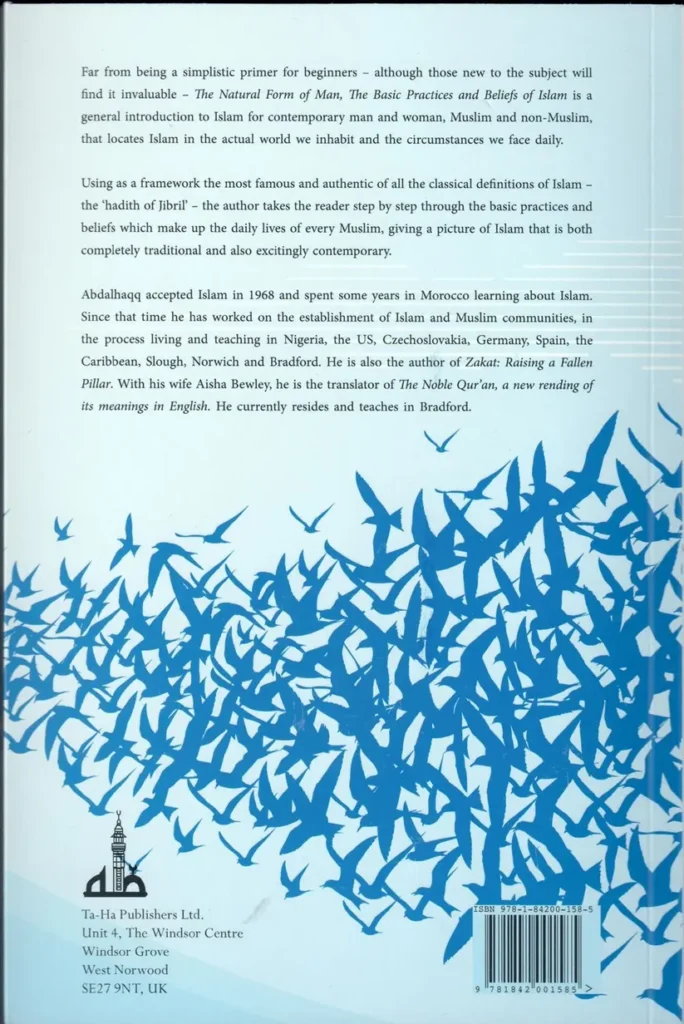
The Natural Form of Man – the Basic Practices and Beliefs of Islam (2nd Edition) by Abdalhaqq Bewley offers a thoughtful and accessible introduction to Islam, designed for both Muslims and non-Muslims. Drawing on the famous Jibril hadith—which outlines the core elements of Islam—this book provides a comprehensive yet relatable exploration of the practices and beliefs that define a Muslim’s daily life.
Key Features:
- Timeless and Contemporary: The book seamlessly blends traditional Islamic principles with modern realities, presenting Islam in a way that resonates with contemporary readers.
- Structured Around the Jibril Hadith: The author organizes the content using this classical definition of Islam, guiding readers through the faith’s spiritual and practical aspects.
- Accessible Writing: Its straightforward and engaging style makes it a valuable resource for beginners and anyone seeking to deepen their understanding of Islam.
This second edition revitalizes the book’s format, title, and design while preserving the original content, making it more appealing for today’s audience.
About the Author
Shaykh Abdalhaqq Bewley is a respected Islamic scholar who embraced Islam in 1968 and gained profound knowledge during his time in Morocco. His teaching and community-building efforts span countries like Nigeria, the US, Spain, and the UK. He is also co-translator of The Noble Qur’an: A New Rendering of Its Meanings in English and the author of Zakat: Raising a Fallen Pillar.
Ideal for:
This book is an excellent resource for those new to Islam or anyone curious about its core teachings. It provides an inviting and accurate depiction of the faith as it is practiced and understood in both traditional and modern contexts.
Analysis of The Natural Form of Man – the Basic Practices and Beliefs of Islam
This book aims to provide a foundational understanding of Islam, making it accessible for both Muslims and non-Muslims. Its approach, using the renowned Jibril hadith as a framework, allows it to present Islam in a structured, traditional, yet contemporary way. Below is an analysis of its suitability for a non-Muslim reader seeking to learn about Islam:
Strengths as a Resource for Non-Muslims:
1. Clear Structure:
– The book uses the Jibril hadith—a well-known teaching tool in Islamic tradition—as its framework. This approach systematically introduces Islam’s core elements: *iman* (faith), *islam* (practice), and *ihsan* (spiritual excellence). It provides a logical and holistic introduction to Islam.
2. Balanced Perspective:
– The description emphasizes that the book is both “completely traditional” and “excitingly contemporary.” This suggests that it bridges Islamic authenticity with relevance to modern life, making it appealing to readers unfamiliar with the faith.
3. Accessible to a Wide Audience:
– Designed for both Muslims and non-Muslims, the book likely avoids overly technical jargon, making it approachable for readers new to Islamic teachings.
4. Focus on Practicality:
– By highlighting the daily practices and beliefs of Muslims, the book offers a grounded understanding of how Islam is lived. This practical focus is often what non-Muslims seek when trying to understand the faith beyond abstract theology.
5. Relatable Context:
– The book locates Islam “in the actual world we inhabit today,” addressing contemporary challenges and situations. This can help non-Muslims relate Islamic principles to their own lives and contexts.
Potential Challenges for Non-Muslims:
1. Limited Scope:
– While the book appears to be a well-rounded introduction, it focuses on foundational beliefs and practices. Readers looking for an in-depth exploration of Islamic history, culture, or advanced theology might find the content too basic.
2. Traditional Framework:
– The reliance on the Jibril hadith, while effective for structure, might feel overly theological or traditional for readers who prefer a more secular or anthropological introduction to Islam.
3. No Specific Focus on Interfaith:
– Although it is accessible to non-Muslims, the description does not explicitly mention interfaith dialogue or comparative insights. Some non-Muslims might prefer a book that explicitly connects Islamic teachings to their own beliefs or cultural backgrounds.
Who Might Find This Book Valuable?
– Beginner Readers:
– Non-Muslims with little to no prior knowledge of Islam will likely appreciate its straightforward presentation of beliefs and practices.
– Practical Learners:
– Those interested in how Islam shapes the daily lives of its adherents, rather than abstract theology, will find this book informative.
– Modern Readers:
– Readers curious about Islam’s relevance in the contemporary world will benefit from its focus on present-day circumstances.
Who Might Struggle with This Book?
– Advanced Readers:
– Those looking for an in-depth discussion of Islamic philosophy, comparative religion, or political aspects of Islam may find this book too introductory.
– Critically-Minded Non-Muslims:
– Readers who prefer a more analytical or academic tone might feel the book leans too heavily on traditional Islamic sources without addressing broader critiques or questions.
Recommendation:
The Natural Form of Man – the Basic Practices and Beliefs of Islam is an excellent resource for non-Muslims who are:
– Seeking an accessible and structured introduction to Islam.
– Interested in understanding the faith as practiced in everyday life.
– Curious about how Islamic principles apply to the modern world.
Misquoting Muhammad: The Challenge and Choices of Interpreting the Prophet’s Legacy by Jonathan A.C. Brown – ONEWORLD PUBLICATIONS
Description
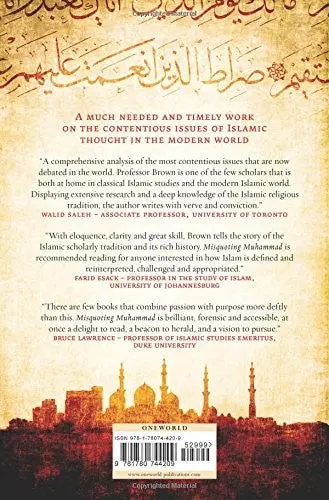
Misquoting Muhammad: The Challenge and Choices of Interpreting the Prophet’s Legacy by Jonathan A.C. Brown is a thought-provoking exploration of how Islamic teachings have been interpreted and reinterpreted throughout history. It delves into the complexities of Islamic law and the evolving understanding of controversial topics, offering valuable insights into the intellectual traditions of Islam.
Key Features:
- Historical Context: The book provides a journey through Islamic civilization, from the Arab Spring protests to the fall of the Ottoman Empire, highlighting how cultural, political, and social changes have influenced Islamic thought.
- Controversial Issues: It addresses modern concerns such as jihad, Shariah law, and gender roles, clarifying how these ideas developed and are often misrepresented in contemporary discourse.
- Balancing Reason and Revelation: Brown discusses how Muslim scholars have navigated the tension between adhering to scripture and adapting to changing societal values.
Why It Stands Out:
The book offers a nuanced view, challenging stereotypes and misconceptions about Islam. By tracing the evolution of key aspects of the faith, it provides readers with a deeper understanding of how interpretation and context shape religious beliefs and practices.
Ideal for:
This book is perfect for readers interested in exploring the complexities of Islamic thought and law, as well as for those who want to dispel common misunderstandings about Islam in the modern world. It offers an engaging and scholarly perspective that bridges the gap between historical context and contemporary issues.
About the Author
Jonathan A.C. Brown is a renowned Islamic scholar and professor at Georgetown University. His expertise in Islamic history and law lends authority and depth to this work, making it a compelling read for both Muslims and non-Muslims seeking to understand Islam’s intellectual legacy.
Analysis of Misquoting Muhammad The Challenge and Choices of Interpreting the Prophet’s Legacy
Overview:
This book provides a historical and intellectual exploration of how Islamic teachings and legal interpretations have evolved over centuries. It seeks to demystify controversial topics like jihad, Shariah law, and gender roles by tracing the processes through which Islamic scholars have interpreted scripture and navigated changing cultural and social contexts.
Strengths for a Non-Muslim Audience:
1. Focus on Historical and Intellectual Development:
– The book examines how Islamic dogma and legal rulings were not fixed at the religion’s inception but evolved through the efforts of scholars over time. This historical approach offers non-Muslims an insightful look at Islam as a dynamic tradition rather than a monolithic system.
2. Contextualizing Controversies:
– By addressing hot-button issues like jihad, underage marriage, and corporal punishments, the book engages directly with topics that are often sensationalized in media. It provides nuanced perspectives that are valuable for readers seeking clarity on these subjects.
3. Accessible Writing Style:
– Jonathan A.C. Brown is known for making complex topics approachable without oversimplifying them. His ability to bridge academic rigor and readability makes this book appealing to both lay readers and scholars.
4. Balanced Presentation:
– The book aims to balance **reason and revelation**, addressing how Muslim intellectuals have grappled with reconciling religious principles with evolving societal values. This is particularly valuable for non-Muslims curious about the intersection of tradition and modernity in Islam.
5. Global Scope:
– By spanning diverse contexts—from the Arab Spring to the Ottoman Empire and Indian Ocean trade routes—the book highlights the diversity of Islamic thought and practice, dispelling the myth of Islam as a single, uniform tradition.
Potential Challenges:
1. Sophistication of Content:
– While accessible, the book engages with deep intellectual and theological debates. Readers unfamiliar with Islamic history or the basics of the religion might find parts of it challenging to follow without prior knowledge.
2. Focus on Scholarly Perspectives:
– The emphasis on how Muslim scholars have interpreted Islam might feel academic or abstract to some readers, especially those looking for a straightforward introduction to Islamic beliefs and practices.
3. Indirect Approach to Basics:
– This book is not a primer on Islam. Non-Muslims looking for a foundational understanding of Islamic faith and practices might find it less suited as an initial introduction.
Who Might Find It Useful?
– Non-Muslims with Prior Knowledge of Islam:
– Readers who already have some familiarity with Islam and want to understand its intellectual and historical evolution will benefit greatly from this book.
– Academically Curious Readers:
– Those interested in theology, comparative religion, or how religious traditions adapt over time will appreciate its depth and historical analysis.
– Readers Seeking Clarity on Controversies:
– If the goal is to understand contentious issues often associated with Islam in the media, this book offers invaluable insights.
Who Might Not Find It Useful?
– Complete Beginners to Islam:
– Non-Muslims with no prior exposure to Islamic beliefs or practices might find this book too advanced or specific.
– Readers Seeking Devotional or Faith-Based Content:
– This book is analytical and historical rather than spiritual, making it less suitable for those looking for an introduction to the faith’s devotional aspects.
Recommendation:
Misquoting Muhammad is an excellent book for non-Muslims seeking to understand the complexities of Islamic intellectual history and the factors shaping Islamic law and thought. It is particularly suited for readers with some background in religion or history who want a deeper look at how Islam has negotiated its principles across time and place.
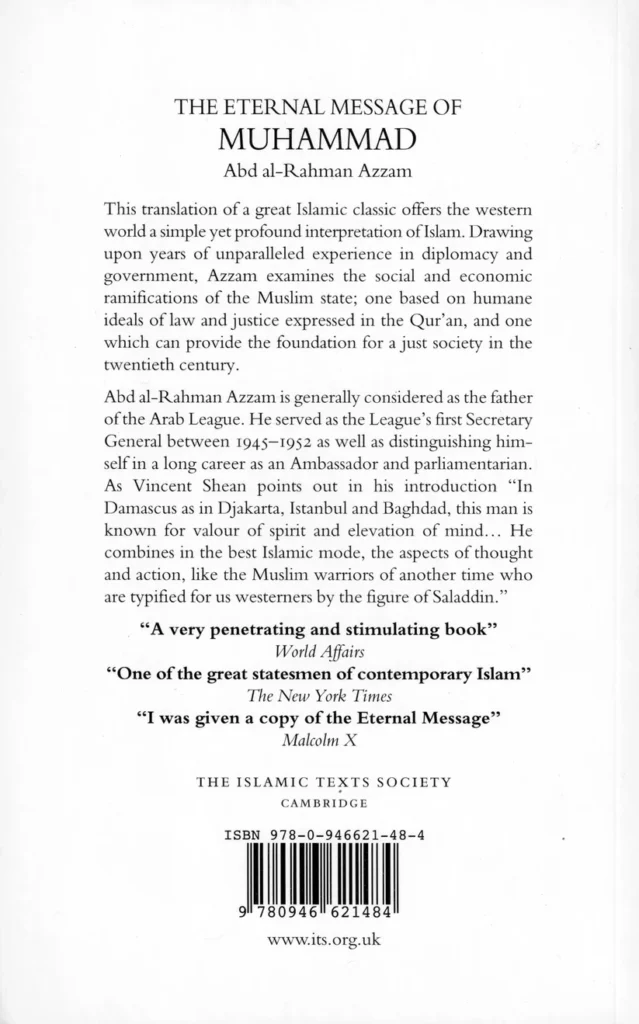
The Eternal Message of Muhammad By Abdul Rahman Hassan Azzam , Caesar E. Farah (translator) – ISLAMIC TEXTS SOCIETY
Description
The Eternal Message of Muhammad by Abdul Rahman Hassan Azzam, translated by Caesar E. Farah, is a profound exploration of the principles and values of Islam, offering insights into its foundational messages and their relevance in contemporary society. Written by a distinguished diplomat and the first Secretary-General of the Arab League, this book presents a unique blend of scholarship, personal conviction, and cultural critique.
Key Themes:
- Foundations of the Faith: Azzam discusses the life of the Prophet Muhammad (peace be upon him) and the essentials of Islam, emphasizing its principles of justice, compassion, and spiritual connection to God.
- Social and Political Vision: The book addresses the nature of an Islamic state, exploring its legal and ethical framework and its ability to foster a just, classless society rooted in equality and moral values.
- Defense Against Materialism: Azzam critiques modern materialistic ideologies, highlighting the spiritual and ethical alternatives offered by Islam in the face of secularism and economic-driven philosophies.
- Global Relevance: With sections on international relations, societal reform, and the causes of global unrest, the author contextualizes Islam’s universal message for a world in flux.
Special Features:
- Historical Significance: Malcolm X’s engagement with this book marked a pivotal moment in his embrace of traditional Islam.
- Expert Commentary: Azzam draws from his extensive experience in diplomacy and governance to articulate a vision of Islam that is both spiritually enriching and practically applicable.
Why Read This Book:
This work bridges the gap between tradition and modernity, offering a compelling case for Islam’s enduring relevance in addressing societal challenges. Its profound insights make it an essential read for Muslims and non-Muslims alike seeking to understand the universal and timeless aspects of the faith.
About the Author
Abdul Rahman Hassan Azzam (1893–1976), also known as Azzam Pasha, was a prominent Egyptian diplomat and a staunch advocate of pan-Arabism. His leadership in the Arab League and contributions to Islamic thought continue to inspire.
Analysis of The Eternal Message of Muhammad
This book offers a deep exploration of Islam’s principles, as articulated in the Qur’an, and their application in building a humane, just society. It connects Islamic teachings to broader societal themes, showcasing their relevance to both historical and contemporary contexts. Below is an analysis of its suitability for a non-Muslim reader seeking to learn about Islam:
Strengths as a Resource for Non-Muslims:
1. Accessible to Western Audiences:
– The book is presented as a bridge between Islamic principles and Western understanding, offering a “simple yet profound interpretation of Islam.” This makes it suitable for readers unfamiliar with the faith or with preconceived notions about it.
2. Focus on Social and Economic Principles:
– By examining the Qur’an’s guidance on law, justice, and statecraft, the book highlights Islam’s practical applications in governance and society. Non-Muslims interested in how religion intersects with societal structure and ethics will find this approach valuable.
3. Historical and Intellectual Depth:
– Azzam’s stature as a diplomat and thinker adds credibility and insight. His role as the first Secretary-General of the Arab League lends authority to his reflections on Islam as both a spiritual and societal force.
4. Inspiration for Figures Like Malcolm X:
– The book’s influence on Malcolm X, a prominent figure in American history, provides an inspiring real-world example of how its ideas can resonate with and transform individuals.
5. Balanced Blend of Thought and Action:
– Azzam combines intellectual depth with practical insight, likened to historical Muslim figures such as Saladin. This dual focus may resonate with readers who value both theory and application.
Potential Challenges for Non-Muslims:
1. Potentially Dated Perspective:
– As the book was written decades ago, some examples or cultural references may feel dated or less relevant to modern readers seeking insight into today’s global context.
2. Focus on Political and Social Aspects:
– While the exploration of Islam’s societal principles is valuable, readers seeking a purely spiritual or theological introduction to Islam might find this focus less appealing.
3. Assumes Some Background Knowledge:
– The description suggests a focus on the “Muslim state” and its foundations, which might be more relevant to readers familiar with Islamic governance or those exploring Islam’s societal implications. Beginners looking for a primer on basic Islamic beliefs and practices might find the book slightly advanced.
4. Limited Emphasis on Interfaith Connections:
– Although it aims to make Islam comprehensible to Western audiences, the book does not explicitly address interfaith dialogue or directly engage with non-Muslim perspectives, which could be a missed opportunity for deeper cross-cultural understanding.
Who Might Find This Book Valuable?
– Academically Curious Readers:
– Those interested in the historical, social, and economic dimensions of Islam will find this book insightful.
– Social Justice Advocates:
– Readers intrigued by how Islam informs concepts of justice, governance, and ethical societal structures will appreciate its focus.
– Malcolm X Admirers:
– Individuals inspired by Malcolm X’s life journey might find value in exploring a book that shaped his understanding of Islam.
Who Might Struggle with This Book?
– Complete Beginners:
– Readers with no background in Islamic teachings might find this book more advanced and less focused on foundational beliefs and practices.
– Spiritual Seekers:
– Those looking for a purely devotional or theological exploration of Islam may find its focus on societal principles less relevant.
Recommendation:
The Eternal Message of Muhammad is a thought-provoking resource for non-Muslims who are:
– Interested in the intersection of religion, law, and societal justice.
– Seeking to understand Islam’s relevance in shaping humane governance and ethical statecraft.
– Curious about influential Islamic thought leaders and their contributions.
Reflections By Gai Eaton – ISLAMIC TEXTS SOCIETY
Description
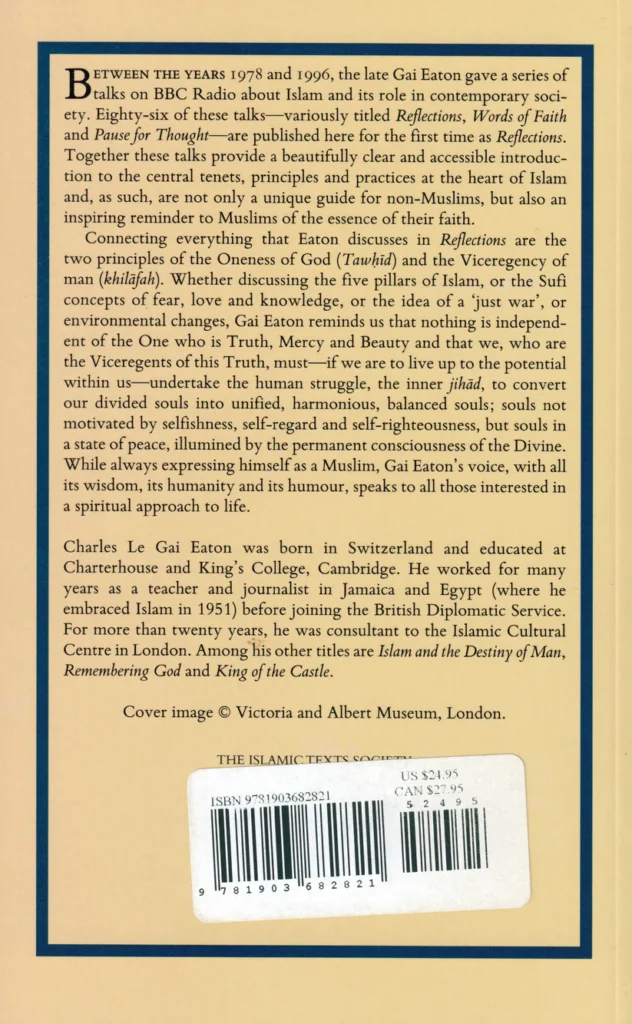
Reflections by Gai Eaton is a profound and thought-provoking collection of 86 talks delivered by the author on BBC Radio between 1978 and 1996. Published for the first time in book form, these reflections offer a clear, accessible, and deeply spiritual exploration of Islam and its relevance in the modern world.
Key Themes:
- Central Tenets of Islam: Gai Eaton delves into foundational Islamic principles such as Tawhid (the Oneness of God) and Khilafah (humanity’s role as stewards of the Earth), connecting them to everyday spiritual and ethical practices.
- Sufism and Inner Transformation: Eaton discusses core Sufi concepts such as fear (makhafah), love (mahabbah), and knowledge (ma’rifah), highlighting the spiritual struggle (inner jihad) to align the soul with divine harmony.
- Relevance to Modern Issues: From environmental concerns to the idea of a just war, Eaton ties Islamic teachings to contemporary challenges, emphasizing the universal values of justice, mercy, and balance.
- Guidance for Muslims and Non-Muslims Alike: While written from a Muslim perspective, Eaton’s insights resonate with anyone interested in a spiritual approach to life, offering both a guide for non-Muslims and an inspirational reminder for Muslims.
Why Read This Book:
Reflections is more than a guide to Islam—it’s an invitation to ponder life’s deeper questions through the lens of spirituality and divine consciousness. With its blend of clarity, humor, and humanity, the book serves as a beacon of light for seekers of wisdom, regardless of faith or background.
About the Author
Charles le Gai Eaton (1921–2010), also known as Hasan le Gai Eaton, was a British diplomat, writer, and Sufi scholar. Born in Switzerland, he embraced Islam in 1951 during his time in Egypt. Eaton had a distinguished career as a journalist, teacher, and British diplomat, eventually becoming a consultant to the Islamic Cultural Centre in London. Known for his wisdom and engaging style, Eaton’s works continue to inspire readers worldwide.
Analysis of Reflections By Gai Eaton
Reflections by Gai Eaton is an excellent book for non-Muslims to learn about Islam, especially if they are interested in its spiritual and philosophical dimensions. Here’s an analysis of its suitability:
Strengths for Non-Muslims:
1. Accessible and Clear Introduction:
– The book compiles talks originally given on BBC Radio, designed to introduce Islam to a broad audience. This ensures the language is approachable and the concepts are clearly explained, making it ideal for non-Muslims.
2. Holistic Approach to Islam:
– The book covers central Islamic tenets, principles, and practices, including the Five Pillars, the Oneness of God (Tawhid), and the concept of man as God’s viceregent (khilafah). These topics provide a foundational understanding of Islam.
3. Focus on Universality:
– Gai Eaton’s tone and themes are inclusive, addressing not just Muslims but also those seeking a spiritual approach to life. This universality makes it appealing to non-Muslims curious about Islam’s deeper, humanistic aspects.
4. Blend of Theology and Philosophy:
– The book intertwines Islamic theology with broader philosophical and spiritual reflections, such as the inner struggle (jihad) and concepts of mercy, love, and justice. This makes it more than a primer—it’s a thought-provoking exploration of the essence of faith.
5. Author’s Perspective:
– Gai Eaton, a British convert to Islam, brings a unique perspective that resonates with both Muslim and non-Muslim audiences. His insights into reconciling Western and Islamic worldviews are particularly valuable for non-Muslims.
6. Engagement with Contemporary Issues:
– The book touches on topics like environmental changes and justice, linking them to Islamic principles. This makes it relevant for readers exploring how Islamic teachings apply to modern concerns.
7. Spiritual Depth:
– Concepts such as the sufi understanding of fear (makhafah), love (mahabbah), and knowledge (ma’rifah) offer a glimpse into the spiritual richness of Islam, appealing to readers interested in mysticism and personal transformation.
Potential Challenges for Some Non-Muslims:
1. Philosophical Depth:
– While the book’s philosophical and spiritual focus is a strength, readers looking for a straightforward introduction to Islam’s history, law, or practices might find it less practical.
2. Less Focus on Contemporary Misconceptions:
– Unlike some other books, *Reflections* does not seem to address common misconceptions about Islam (e.g., extremism, women’s rights) directly. Non-Muslims with such questions might need supplementary resources.
Why It’s a Good Option for Non-Muslims:
– Broad Appeal: The book’s inclusive and reflective style makes it accessible to a wide audience.
– Spiritual and Philosophical Depth: It provides an enriching perspective on Islam that goes beyond rituals to explore its core values and worldview.
– Practical Insights: While philosophical, it also discusses actionable principles, such as the inner jihad, encouraging self-improvement and balance.
– Unique Format: As a collection of radio talks, it feels conversational and engaging, breaking down complex topics into digestible pieces.
Why It Might Not Be the Best Option for Some:
– Non-Muslims seeking an in-depth overview of Islamic law, history, or common modern debates might find it insufficient as a standalone resource. For such readers, pairing it with a more structured book like *What Everyone Should Know About Islam and Muslims* by Suzanne Haneef could be helpful.
Recommendation:
Reflections By Gai Eaton is highly recommended for non-Muslims interested in the spiritual and philosophical essence of Islam. It offers a compassionate and nuanced portrayal of the faith, focusing on universal values and the transformative power of Islamic teachings. For those seeking a more detailed understanding of Islamic practices or responses to contemporary misconceptions, this book serves as an excellent starting point, complemented by additional readings.
Islamic Books Moderately Suitable for Non-Muslims
Islamic Books requiring some prior understanding but still informative for dedicated readers.
Living as a Muslim By Ashraf Ali Thanwi , Iqbal Husain Ansari (translator) – TURATH PUBLISHING
Description
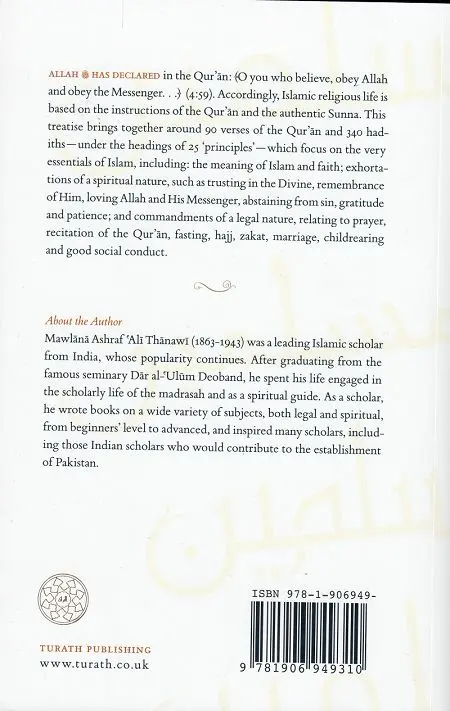
Living as a Muslim by Ashraf Ali Thanwi, translated by Iqbal Husain Ansari, is a comprehensive guide that presents the core tenets of Islam through a blend of Qur’anic verses and Hadiths. Published by Turath Publishing, the book organizes its content into 25 principles that encompass both spiritual and legal aspects of Islamic life. These principles delve into the fundamentals of faith, such as trust in Allah, remembrance, gratitude, and patience, as well as practical guidance on acts of worship, social conduct, and family life.
The compilation includes approximately 90 Qur’anic verses and 340 Hadiths, serving as a concise reference for understanding Islamic obligations and virtues. Readers are guided on matters like prayer, fasting, zakat, hajj, marriage, and child-rearing, all framed within an authentic scriptural foundation.
About the Author
Ashraf Ali Thanwi (1863–1943) was a prominent Islamic scholar and Sufi from India, celebrated for his profound contributions to Islamic jurisprudence and spirituality. A graduate of the esteemed Dar al-ʿUlum Deoband, he authored numerous works on diverse subjects, influencing generations of scholars and ordinary Muslims alike. His scholarship and spiritual guidance remain highly regarded across the Muslim world.
This book is ideal for readers seeking a clear, structured presentation of Islam’s essential teachings, whether they are new to the faith or looking to deepen their understanding. Its combination of scriptural evidence and thematic organization makes it a valuable resource for anyone striving to live a life in accordance with Islamic principles.
Analysis of Living as a Muslim
The book *Living as a Muslim* by Ashraf Ali Thanwi, translated by Iqbal Husain Ansari, offers a rich compilation of Islamic teachings, making it a valuable resource. However, its suitability for non-Muslims depends on the reader’s prior exposure to Islam and their objectives in studying it. Here’s an analysis based on the description:
Strengths for Non-Muslims:
1. Comprehensive Content:
– The book draws from **90 verses of the Qur’an** and **340 hadiths**, offering a detailed exploration of Islamic teachings. This breadth ensures readers gain exposure to key aspects of the faith.
2. Structured Presentation:
– The content is organized into 25 principles, covering essentials like faith, spirituality, and legal obligations. This clear structure can help non-Muslims grasp the holistic nature of Islamic life.
3. Focus on Spiritual and Practical Aspects:
– The inclusion of topics like trust in Allah, remembrance, gratitude, and patience adds a universal spiritual appeal. Simultaneously, practical topics like marriage, child-rearing, and social conduct provide insight into how Islam guides daily life.
4. Authenticity:
– The heavy reliance on Qur’anic verses and hadiths ensures that the teachings are authentic and rooted in traditional Islamic sources. This is essential for non-Muslims seeking accurate information.
Potential Challenges for Non-Muslims:
1. Advanced Content:
– The book’s detailed focus on Islamic practices (e.g., zakat, fasting, child-rearing) may assume a level of familiarity with Islamic terms and concepts, which could be overwhelming for someone new to Islam.
2. Religious Tone:
– The directive style of quoting commands from the Qur’an and Sunna might feel prescriptive for a non-Muslim audience unfamiliar with Islamic traditions, potentially making it less relatable compared to introductory books.
3. Lack of Context for Non-Muslims:
– The description does not indicate whether the book addresses misconceptions, introduces the broader context of Islam, or provides explanations tailored to non-Muslims. This could limit its appeal as a standalone resource for those exploring Islam for the first time.
Why It Might Be a Good Choice:
– For non-Muslims who already have some knowledge of Islam and want to delve deeper into its teachings and practices, this book could be an excellent guide. It offers both spiritual and practical insights, giving readers a well-rounded view of what it means to “live as a Muslim.”
Why It Might Not Be the Best Starting Point:
– For absolute beginners or those unfamiliar with Islamic terminology and concepts, the book might feel too dense or advanced. A more introductory book with a focus on clarifying misconceptions and providing broader context might be more appropriate.
“Living as a Muslim” is a valuable resource for those who are curious about the practical and spiritual dimensions of Islam. However, it may be better suited as a follow-up read after a beginner-friendly introduction to Islam. Non-Muslims with some prior understanding of the faith or a strong interest in its practices will likely find this book enriching.
An Introduction to Islamic Faith and Thought By Ali Unal – TUGHRA BOOKS
Description
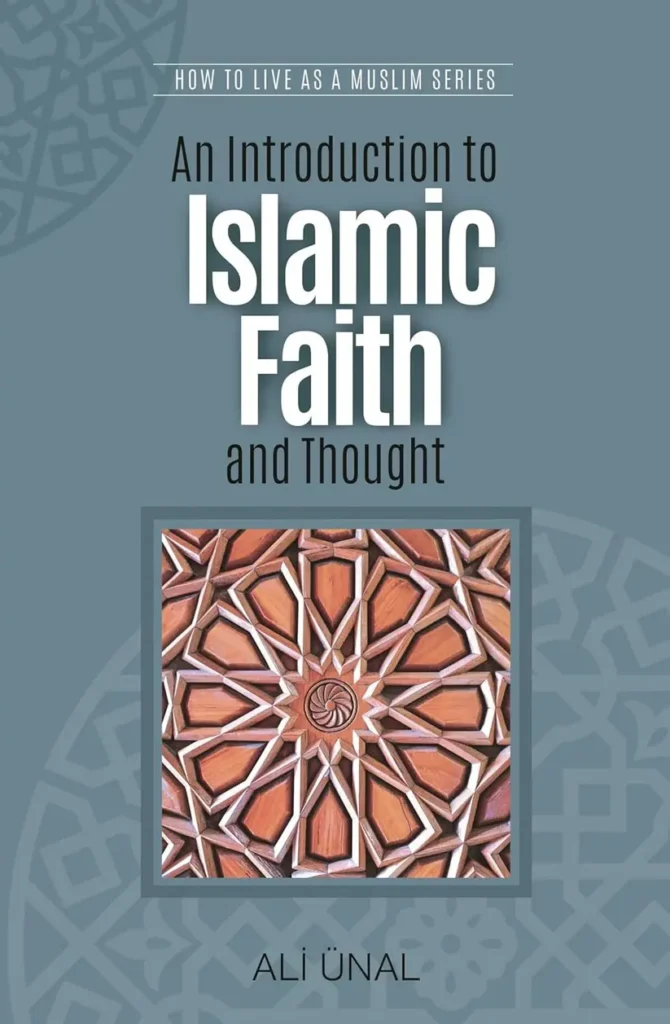
An Introduction to Islamic Faith
and Thought by Ali Unal provides
a comprehensive and accessible overview of Islam’s core beliefs, practices, and worldview. Part of the How to Live as a Muslim series, this book serves as both an educational guide for those new to Islam and a reflective tool for Muslims seeking deeper understanding.
Key Topics:
- Foundations of Faith: The book explores the pillars of Islamic faith and explains the worldview of Islam, emphasizing humanity’s role and responsibilities within it.
- Revelation and Guidance: It highlights the significance of the Qur’an as the ultimate guide for humanity and explains the role of Prophets in bringing truth to light.
- Afterlife and Eschatology: Unal delves into topics such as Resurrection, the Afterlife, Divine Destiny, and the unseen realms, offering insights into Islamic eschatology.
- Human Journey: The book discusses how God equips humanity with the tools and guidance necessary for fulfilling their purpose in this life and preparing for the Hereafter.
Why This Book?
This work provides both Muslims and non-Muslims with an engaging explanation of Islamic beliefs, bridging the gap between theoretical knowledge and practical living. It invites readers to reflect on their role in life and their relationship with the Divine.
About the Author
Ali Unal is a respected scholar and translator with extensive contributions to Islamic literature. His other works include Living in the Shade of Islam, Islamic Perspectives on Science, Islam Addresses Contemporary Issues, and The Qur’an with Annotated Interpretation in Modern English. Known for his clear and insightful writing, Unal continues to bridge understanding between Islamic principles and contemporary thought.
Analysis of An Introduction to Islamic Faith and Thought
Overview:
This book provides an introduction to the core beliefs and worldview of Islam. It seeks to explain foundational concepts such as the pillars of faith, the purpose of life, the role of the Qur’an, Prophets, and eschatological themes like Resurrection, Afterlife, and Divine Destiny. As part of the “How to Live as a Muslim” series, it appears to offer a comprehensive overview of Islamic theology and its practical implications.
Strengths for a Non-Muslim Audience:
1. Comprehensive Overview of Core Beliefs:
– The book delves into the **pillars of Islamic faith**, the concept of Divine Destiny, and eschatological themes, providing a robust understanding of the Islamic worldview. For a non-Muslim, this can serve as a foundational introduction to the religion.
2. Explanation of Prophethood and the Qur’an:
– By discussing why Prophets were sent and why the Qur’an is considered the ultimate guide, the book addresses key aspects of Islamic theology that are often misunderstood or unfamiliar to non-Muslims.
3. Accessible Approach:
– As part of a series aimed at practical understanding, the book may adopt a clear and approachable style, making complex theological ideas digestible for readers unfamiliar with Islam.
4. Focus on Purpose and Meaning:
– Its exploration of questions like “what God expects of us” and “how we fit into the Islamic worldview” can resonate with readers interested in spirituality and existential questions, regardless of their faith background.
Potential Challenges:
1. Target Audience:
– As part of a series titled “How to Live as a Muslim,” the book may assume some prior interest or alignment with Islam, which could make it less relatable for readers seeking a neutral or academic perspective.
2. Limited Sociocultural Context:
– The description focuses on theological and eschatological topics, with less emphasis on how Islam relates to contemporary social, political, or cultural issues, which might be of interest to non-Muslim readers.
3. Depth of Content:
– While it seems comprehensive, the description does not clarify if the book engages with critiques, misconceptions, or historical developments in Islam, which could be useful for a non-Muslim audience seeking a well-rounded view.
Who Might Find It Useful?
– Non-Muslims Seeking a Theological Introduction:
– For readers curious about the **belief system of Islam**, this book offers a good overview of core doctrines and spiritual concepts.
– Spiritual Seekers:
– Individuals interested in the broader questions of purpose, destiny, and the afterlife might appreciate the book’s philosophical and theological depth.
– Educators or Students of Religion:
– The detailed explanation of Islamic beliefs can serve as a valuable resource for comparative religious studies.
Who Might Not Find It Useful?
– Readers Seeking Cultural or Historical Context:
– The book appears to focus on theology rather than providing insights into the history or sociopolitical aspects of Islam.
– Readers with Little Prior Interest in Islam:
– The focus on spiritual and doctrinal elements might feel less engaging for those looking for a broader introduction or neutral analysis.
Recommendation:
An Introduction to Islamic Faith and Thought by Ali Unal is a good choice for non-Muslims interested in understanding the theological framework of Islam. It provides a clear, faith-based explanation of Islam’s core beliefs and spiritual worldview. However, those looking for a more neutral or historical overview may prefer books like Islam: A Very Short Introduction by Malise Ruthven.
To Be A Muslim: The Basics of Faith By Nazim Al-Haqqani , Radhia Shukrullah (translator) – SPOHR PUBLISHERS
Description
To Be A Muslim: The Basics of Faith by Mawlana Sheikh Nazim al-Haqqani is a foundational guide to understanding and practicing Islam. Written in the 1950s during a time of cultural and linguistic transition in Turkey and Cyprus, this book was crafted to reconnect Muslims with their religious duties and their Ottoman heritage, making Islamic knowledge accessible to a new generation.
Key Features:
- Simplicity and Clarity: The book is written in an easy-to-understand language, intended for readers of all backgrounds, whether new to Islam or seeking to deepen their knowledge.
- Universal Relevance: While originally addressing Turkish and Cypriot Muslims, the book transcends cultural boundaries, offering valuable insights for Muslims worldwide and providing clarity amid widespread misinformation about Islam.
- Comprehensive Basics: It covers fundamental aspects of Islamic faith and practice, making it a useful resource for those beginning their spiritual journey.
- Blessings in Practice: The teachings emphasize how incorporating Islamic principles enriches life with beauty, power, and honor, imbuing everyday experiences with spiritual significance.
Historical Context:
Mawlana Sheikh Nazim al-Haqqani wrote this book during a time when Turkish society was undergoing significant changes, including the transition from Arabic to Latin script, which rendered much of the Ottoman Islamic literature inaccessible. This work sought to bridge that gap and revive traditional Islamic teachings for a modern audience.
Translator’s Note:
Radhia Shukrullah translated the book into English to address the growing demand for reliable Islamic literature in the West. The work was published to help counter misinformation and guide seekers on the path of authentic Islam.
This book remains a timeless resource for Muslims and non-Muslims alike, fostering understanding of Islam’s essence and practices.
About the Author
Mawlana Sheikh Nazim al-Haqqani (1922–2014) was a renowned Islamic scholar and spiritual leader of the Naqshbandi Sufi Order. Known for his wisdom, humility, and dedication to spreading the teachings of Islam, he inspired countless people worldwide. His grandson, Mehmet Nazim Adil, supervised the republication of this book in 2016, honoring Mawlana’s intent to serve Islam and guide its followers.
Analysis of To Be A Muslim: The Basics of Faith
To Be a Muslim: The Basics of Faith by Nazim Al-Haqqani, translated by Radhia Shukrullah, seems to be a concise and foundational resource on Islam. It has potential as a good introduction for non-Muslims seeking to learn about the basics of the faith. Here’s an analysis:
Strengths for a Non-Muslim Audience:
1. Clear and Accessible Language:
– The description highlights that the book was written to be understandable by a general audience, making it approachable for readers unfamiliar with Islam.
2. Focus on Fundamentals:
– The book covers the basic duties and principles of Islam, providing a solid foundation for non-Muslims to understand the religion’s essential teachings and practices.
3. Authentic Perspective:
– Authored by a respected Islamic scholar, Mawlana Sheikh Nazim, the book offers a credible and authentic perspective on Islam. This is particularly valuable in an era where misinformation about Islam is prevalent.
4. Historical and Cultural Context:
– While the book primarily focuses on faith, it also reflects the Ottoman heritage, providing cultural and historical insights. This could enrich the reader’s understanding of the Islamic tradition.
5. Relevance to Modern Times:
– The book was translated with the intention of addressing the needs of Western audiences amid widespread misinformation. This makes it particularly suited for non-Muslims who may be navigating conflicting narratives about Islam.
Challenges for Some Non-Muslim Readers:
1. Ottoman References:
– The preface mentions that some Ottoman references might be unfamiliar to English readers. While this adds depth for those interested in Islamic history, it could be less engaging or relevant for non-Muslims seeking a straightforward introduction to Islam.
2. Focus on Turkish and Cypriot Contexts:
– Originally intended for a Turkish-speaking audience, parts of the book might lean towards addressing issues specific to that cultural and historical background, which may not fully align with the interests of a global non-Muslim audience.
3. Limited Exploration of Broader Misconceptions:
– While the book aims to combat misinformation, it might not specifically address contemporary global misconceptions about Islam (e.g., extremism, gender issues, etc.) that a non-Muslim reader might be curious about.
Why It’s a Good Option for Non-Muslims:
– Basic and Straightforward: It focuses on the fundamentals of Islamic belief and practice, which is essential for someone new to the subject.
– Trusted Author: Mawlana Sheikh Nazim’s reputation as a spiritual guide ensures the book’s authenticity and reliability.
– Intended for Outreach: The translation was explicitly made for Western readers, making it relevant for those unfamiliar with Islam but interested in learning.
Why It Might Not Be the Best Option for Some:
– Narrow Focus: Non-Muslims looking for a broader overview, including topics like Islamic history, philosophy, or responses to modern misconceptions, might find this book too narrowly focused on basics.
– Cultural Specificity: Some references to Ottoman heritage might feel tangential to readers more interested in Islam’s universal principles.
Recommendation:
This book is a suitable choice for non-Muslims seeking a straightforward introduction to Islamic faith and practice, especially those who appreciate authentic sources. However, it would work best as a foundational text, supplemented with additional resources that address contemporary questions and misconceptions about Islam.
Its simplicity, authenticity, and focus on core teachings make it a valuable resource, but it might not satisfy readers looking for a more comprehensive exploration of Islam in a global or modern context.
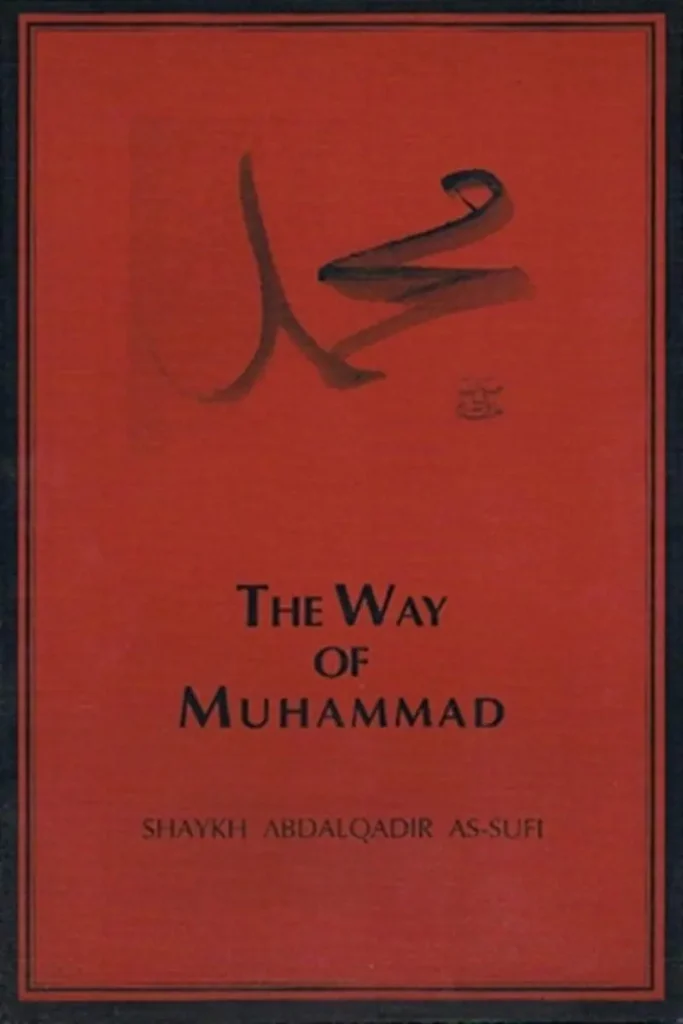
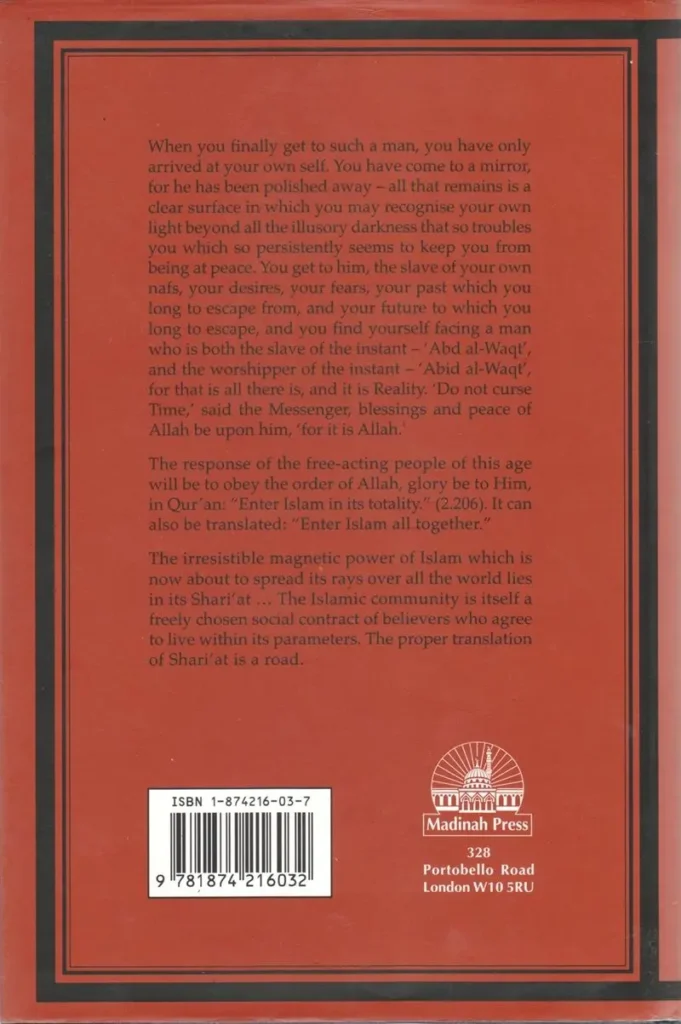
The Way of Muhammad By Abdalqadir as-Sufi – DIWAN PRESS
Description
The Way of Muhammad by Abdalqadir as-Sufi offers a profound exploration of Islam, presenting it as a complete way of life rooted in the teachings and practices of the Prophet Muhammad (peace be upon him). First published as a meditation on the five pillars of Islam, this work connects timeless spiritual principles with modern societal challenges, making it relevant for contemporary seekers.
Key Highlights:
- Holistic Understanding of Islam: The book delves deeply into the deen (way of life) as established by the Prophet Muhammad (peace be upon him), emphasizing the integral role of governance, justice, and social transactions in forming a truly Islamic community.
- Foundational Pillars: Abdalqadir reflects on the Shahada, Salat, Zakat, Sawm (fasting), and the broader implications of these practices, showing their interconnectedness in forming a harmonious and just society.
- Islamic Economics and Governance: The text critiques modern systems like capitalism and socialism, highlighting the Quranic guidance on trade, the prohibition of usury, and the community-oriented nature of Zakat as key to building ethical, equitable systems.
- Spiritual and Social Transformation: By aligning human actions with divine commands, the book argues for the development of a balanced identity and an integrated human character, where both personal and communal lives are enriched by submission to Allah and adherence to His Messenger’s guidance.
Author’s Perspective:
Abdalqadir as-Sufi draws upon his early influences from the European existential tradition, merging these insights with Islamic principles. This unique synthesis not only introduces Islam to Western audiences but also reinvigorates Muslims’ appreciation for the profound depth and transformative power of their faith.
Preface Insights:
In the updated edition, the author reflects on the global challenges facing Islam and modern society’s failures, offering Islam’s Shari’a as the path to restoring justice and human dignity. His vision emphasizes the revival of Deen al-Fitr, a natural way of life aligned with divine guidance.
This book remains a thought-provoking resource for those seeking a deeper understanding of Islam’s spiritual and societal dimensions, calling for a return to authentic practices rooted in divine wisdom.
About the Author
Abdalqadir as-Sufi (1930–2021) was a prominent Islamic scholar and leader known for his deep commitment to promoting Islam as a comprehensive, transformative faith. A key figure in the Murabitun World Movement, his works address both spiritual development and the socio-economic dimensions of Islamic life.
Analysis of The Way of Muhammad By Abdalqadir as-Sufi
The description of *The Way of Muhammad* presents it as an exposition of Islam, reflecting on its foundational principles and their implications for society. However, its suitability for a non-Muslim reader seeking to learn about Islam depends on their background and interests. Here’s a detailed analysis:
Strengths as a Resource for Non-Muslims:
1. Philosophical Depth:
– The book engages with profound topics, such as governance, economics, and human identity, through the lens of Islamic principles. It connects spiritual practice with societal structures, offering a holistic perspective on Islam as a *deen* (a comprehensive way of life).
2. Historical and Societal Context:
– The author critically contrasts Islamic governance and social systems with Western institutions like capitalism, socialism, and liberal democracy. This can provide non-Muslims with insights into how Islamic principles shape society differently from Western models.
3. Original Reflection:
– The author, an experienced Muslim thinker, provides a personal meditation on Islam’s five pillars and their deeper meanings. This approach may resonate with readers seeking a reflective, experiential account of the faith.
4. Focus on Practical Aspects of Islam:
– By discussing concepts like *zakat* (charitable giving), governance, and societal transactions, the book emphasizes Islam’s practical dimensions, showing how it aims to create a just and equitable society.
Potential Challenges for Non-Muslim Readers:
1. Complex Language and Philosophical Focus:
– The description suggests that the book delves into complex themes with dense language. For non-Muslims unfamiliar with Islamic terms or philosophy, this could be challenging to follow without prior knowledge.
2. Critical Tone Toward Western Systems:
– The book critiques Western institutions, such as banking and constitutional democracy, as inherently flawed compared to Islamic principles. While thought-provoking, this tone might alienate readers who are not already sympathetic to these critiques or looking for a comparative analysis.
3. Niche Perspective:
– The author’s focus on connecting Islam with European existentialism and his critique of modernity make the book more suited for readers interested in philosophy, sociology, or political thought. It may not provide the introductory overview of Islam that some non-Muslims seek.
4. Lack of Neutral Presentation:
– The book’s argument is rooted in a specific Islamic worldview, presenting Islam as the ultimate solution to modern challenges. While this is an authentic perspective, it might not satisfy readers looking for a more neutral or pluralistic introduction to the faith.
Who Might Find This Book Valuable?
– Philosophically Inclined Readers:
– Non-Muslims with an interest in philosophy, governance, or sociology may find the book’s analysis of Islamic principles and societal models intellectually stimulating.
– Readers Exploring Alternatives to Modern Systems:
– Those disillusioned with modern governance, capitalism, or consumerism might resonate with the book’s critique and its presentation of Islam as an alternative.
– Individuals Seeking a Holistic View of Islam:
– The book goes beyond rituals to explore how Islam shapes governance, economics, and identity, making it appealing to readers seeking a comprehensive understanding of Islam as a way of life.
Who Might Struggle with This Book?
– General Readers Seeking an Introduction:
– Non-Muslims looking for a straightforward explanation of Islamic beliefs and practices might find the book too philosophical and critical.
– Readers Unfamiliar with Islamic Terminology:
– Without a background in Islamic studies, the book’s use of terms like *zakat*, *shari‘at*, and *deen al-fitr* could be confusing.
Recommendation:
The Way of Muhammad could be a good option for a non-Muslim if they are:
– Open to exploring Islam through a critical and philosophical lens.
– Interested in how Islam compares to Western societal and economic models.
– Willing to engage with a book that requires intellectual effort and prior context.
Conclusion
Understanding Islam through books is a profound way to bridge gaps and foster mutual respect and knowledge. The selection of Islamic books highlighted in this article offers a variety of perspectives, from foundational introductions to thought-provoking explorations of Islamic principles.
For non-Muslims, highly suitable choices like A Thinking Person’s Guide to Islam and Islam: A Very Short Introduction provide clear, unbiased, and accessible entry points. These books simplify complex topics and dispel common misconceptions. More reflective works such as Misquoting Muhammad and The Eternal Message of Muhammad offer a nuanced look into Islamic thought and history, catering to readers seeking deeper engagement.
For those ready to delve further, books like An Introduction to Islamic Faith and Thought or The Way of Muhammad provide more detailed insights, though they may require a foundational understanding of Islam.
Whether you’re seeking to understand the spiritual essence, ethical framework, or historical evolution of Islam, this list offers a resource tailored to every level of interest. Exploring these works can be a transformative journey, unveiling the universal principles and timeless values that underpin one of the world’s most influential faiths.